
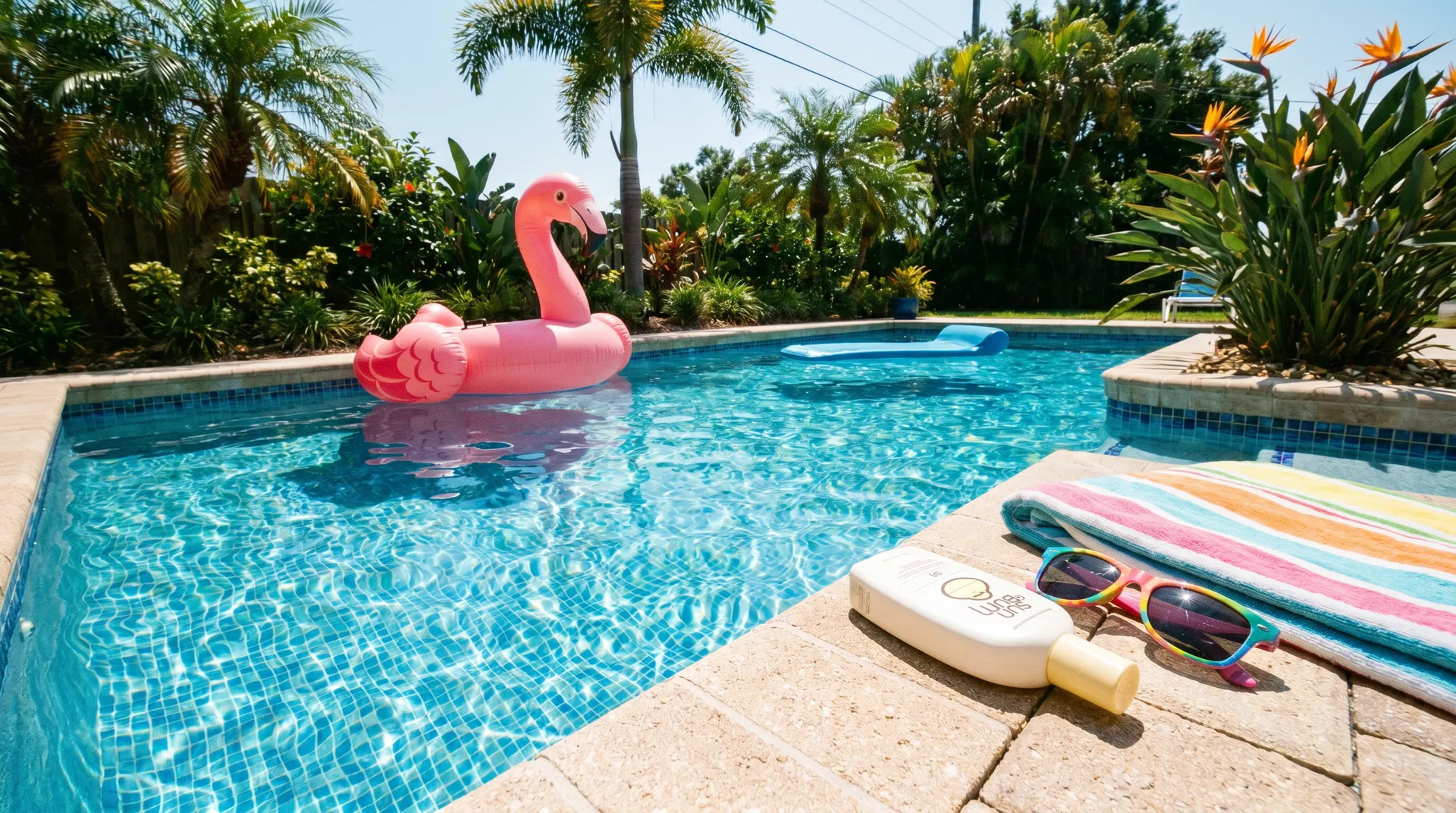
Every summer in Florida, pool owners notice the same thing: the water that looked perfect in April starts turning hazy, smelling funky, or eating through chlorine by June. Most people blame the heat, and the heat is definitely part of it. But the bigger culprit is usually something nobody talks about — the stuff your family brings into the water with them.
Sunscreen. Sweat. Body oils. Cosmetics. Urine (yes, we're going there). These are called bather waste, and during swim season they are the single biggest driver of water chemistry problems in residential pools. Understanding what they do to your water is the first step toward keeping your pool clean, safe, and comfortable all summer long.
What Bather Waste Actually Does to Your Water
When someone jumps in your pool, they bring a lot more than themselves. The average swimmer introduces roughly 0.14 liters of sweat per hour of activity, along with trace amounts of urine, skin cells, body oils, and whatever personal care products they applied before getting in. Multiply that by a pool party with ten people on a 95-degree July afternoon and you have a significant chemical load hitting your water all at once.
These organic compounds don't just float around harmlessly. They react with your free chlorine and consume it. The chlorine that should be sanitizing your water gets tied up fighting bather waste instead. What's left behind is a group of compounds called chloramines — specifically combined chlorine — and they are responsible for most of the problems people associate with "too much chlorine."
Here's the irony: that strong chlorine smell at a pool? That's actually a sign of not enough free chlorine, not too much. It's the smell of chloramines, which form when chlorine reacts with nitrogen-containing compounds in sweat and urine. A properly balanced pool with adequate free chlorine has almost no smell at all.
Sunscreen Is Especially Hard on Your Pool
Of all the things swimmers bring into the water, sunscreen is one of the most chemically disruptive. Modern sunscreens — especially the thick, water-resistant formulas — contain a mix of UV-blocking chemicals, emulsifiers, and oils that don't break down easily in pool water.
Chemical sunscreens (those containing oxybenzone, avobenzone, or octinoxate) react with chlorine and can form disinfection byproducts that are difficult to remove. They also contribute to chlorine demand, meaning your sanitizer gets consumed faster than it would otherwise.
Physical sunscreens (zinc oxide and titanium dioxide) are somewhat less reactive, but the oils and waxes that carry those minerals into the water still create an organic load your chlorine has to deal with. You've probably seen the greasy film that forms on the water surface after a busy swim day — that's largely sunscreen residue.
Over time, sunscreen buildup can clog your filter media, reduce circulation efficiency, and create a biofilm layer on pool surfaces that becomes a breeding ground for algae and bacteria.
| Contaminant | Primary Effect on Water Chemistry |
|---|---|
| Sunscreen (chemical) | Reacts with chlorine, increases chlorine demand, forms byproducts |
| Sunscreen (physical/mineral) | Adds oils and waxes, contributes to filter clogging and surface film |
| Sweat | Introduces nitrogen compounds, drives chloramine formation |
| Body oils and skin cells | Organic load that consumes free chlorine |
| Urine | High nitrogen content, major chloramine driver |
| Cosmetics and hair products | Varied reactions, can affect pH and chlorine stability |
What Happens to Your pH and Alkalinity
Bather waste doesn't just hit your chlorine. It affects the entire balance of your water.
Sweat is slightly acidic, with a pH around 4.5 to 7.5 depending on the individual. Heavy swimmer loads can gradually push your pool's pH downward. Low pH makes chlorine more aggressive (which sounds good but actually causes it to off-gas and dissipate faster), irritates eyes and skin, and can etch plaster surfaces over time.
Urine, on the other hand, tends to push pH upward and introduces phosphates that can feed algae growth. The combination of acidic sweat and alkaline urine, mixed with chlorine chemistry, is part of why pool water during busy swim season can feel like it's constantly fighting itself.
This is why weekly water testing during summer is not optional — it's the only way to catch these shifts before they compound into a bigger problem.
The Shocking Truth About Shocking
One of the most effective tools for dealing with bather waste is breakpoint chlorination, which most people know as "shocking" the pool. The idea is to raise your free chlorine level high enough to oxidize all the combined chlorine (chloramines) and organic contaminants in the water, effectively resetting your chemistry.
During swim season, shocking your pool weekly or after heavy use is a best practice, not an emergency measure. Here's a simple rule of thumb: if your pool had more than the usual number of swimmers, if it rained heavily, or if you notice any cloudiness or odor, shock it that evening.
Use a non-chlorine shock (potassium monopersulfate) if you want to swim again the same day. Use a chlorine-based shock (calcium hypochlorite or sodium dichloro) for a deeper oxidation treatment, and wait until chlorine levels drop back to 1-3 ppm before swimming.
Practical Steps to Protect Your Pool This Summer
You can't stop people from wearing sunscreen — nor should you. But there are practical steps that make a real difference in how your pool handles the summer bather load.
Encourage a pre-swim rinse. A 60-second shower before getting in the pool removes a significant portion of sunscreen, sweat, and body oils before they ever hit your water. Most of the sunscreen that ends up in pools could be eliminated this way.
Test your water at least twice a week. During peak swim season, weekly testing isn't enough. Aim for Tuesday and Friday tests so you can catch chemistry shifts before the weekend rush.
Run your filter longer. During summer, bump your filtration run time up to 10-12 hours per day. More circulation means more opportunities for your filter and sanitizer to do their jobs.
Clean your filter more often. Sunscreen and body oils accumulate in filter media faster than almost anything else. If you have a cartridge filter, rinse it every two weeks during swim season. Sand and DE filters should be backwashed more frequently as well.
Keep your free chlorine between 2-4 ppm. During heavy use periods, the lower end of the normal range (1 ppm) isn't enough buffer. Maintaining 2-4 ppm gives you a cushion against the chlorine demand that comes with a full pool of swimmers.
Consider an enzyme treatment. Enzyme-based pool products are designed specifically to break down oils, sunscreen, and other organic waste before they can react with your chlorine. Adding an enzyme treatment weekly during swim season can significantly reduce chlorine demand and keep your water cleaner between services.
When to Call a Pro
Most swim season chemistry issues are manageable with consistent maintenance. But there are situations where the water gets ahead of you, and trying to fix it yourself can make things worse.
If your pool has gone cloudy and won't clear up after 24-48 hours of treatment, if you're burning through chlorine at an unusual rate, or if you're seeing algae despite maintaining adequate sanitizer levels, those are signs that something deeper is going on. Phosphate buildup, a compromised filter, or a water balance issue that's compounding on itself can all cause these symptoms.
At Float On Pools & Spas, we deal with swim season chemistry problems every day throughout Ormond Beach, Daytona Beach, Palm Coast, and the surrounding Volusia and Flagler county area. If your pool is fighting you this summer, give us a call at 386-286-6825 or reach out through our contact page. We'll get your water back to where it should be so your family can enjoy the season without worrying about what's in the water.